Info
Role
Product Designer
Timeline
4 weeks
Focus
Digital Health
Star-up
B2C
Minimum Viable Product
Tools
Figma
Team
Product Owner
Project Manager
Context
The Project
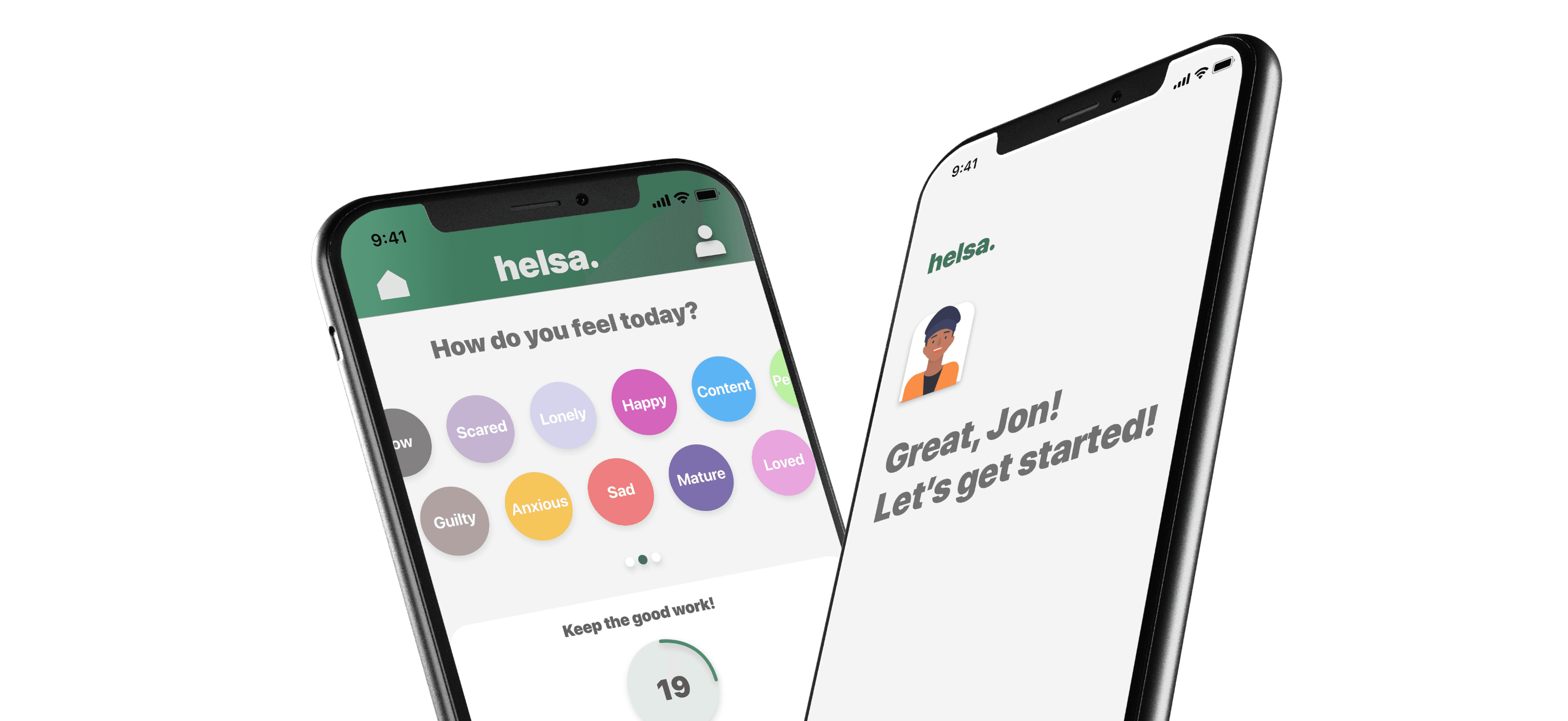
Helsa is an online therapy platform built specifically for the LGBTQ+ community in the UK. The app connects users with psychologists who specialise in LGBTQ+ experiences, therapists who understand the distinct pressures of identity, disclosure, and belonging that mainstream mental health services often miss.
The NHS and LGBTQ+ charities do valuable work, but demand far outstrips capacity. Waiting lists are long and culturally competent care is hard to find. Helsa set out to fill that gap with a platform that felt genuinely safe from the very first screen.
"How might we address the gap in mental health services for LGBTQ+ individuals by providing tailored support that meets the growing demand beyond what the NHS and LGBTQ+ charities can offer?"
Outcome
Thanks to the high-fidelity prototype, which the program deemed a Minimum Viable Product (MVP), the team secured funding from a venture capital-backed startup accelerator.

Part Two:
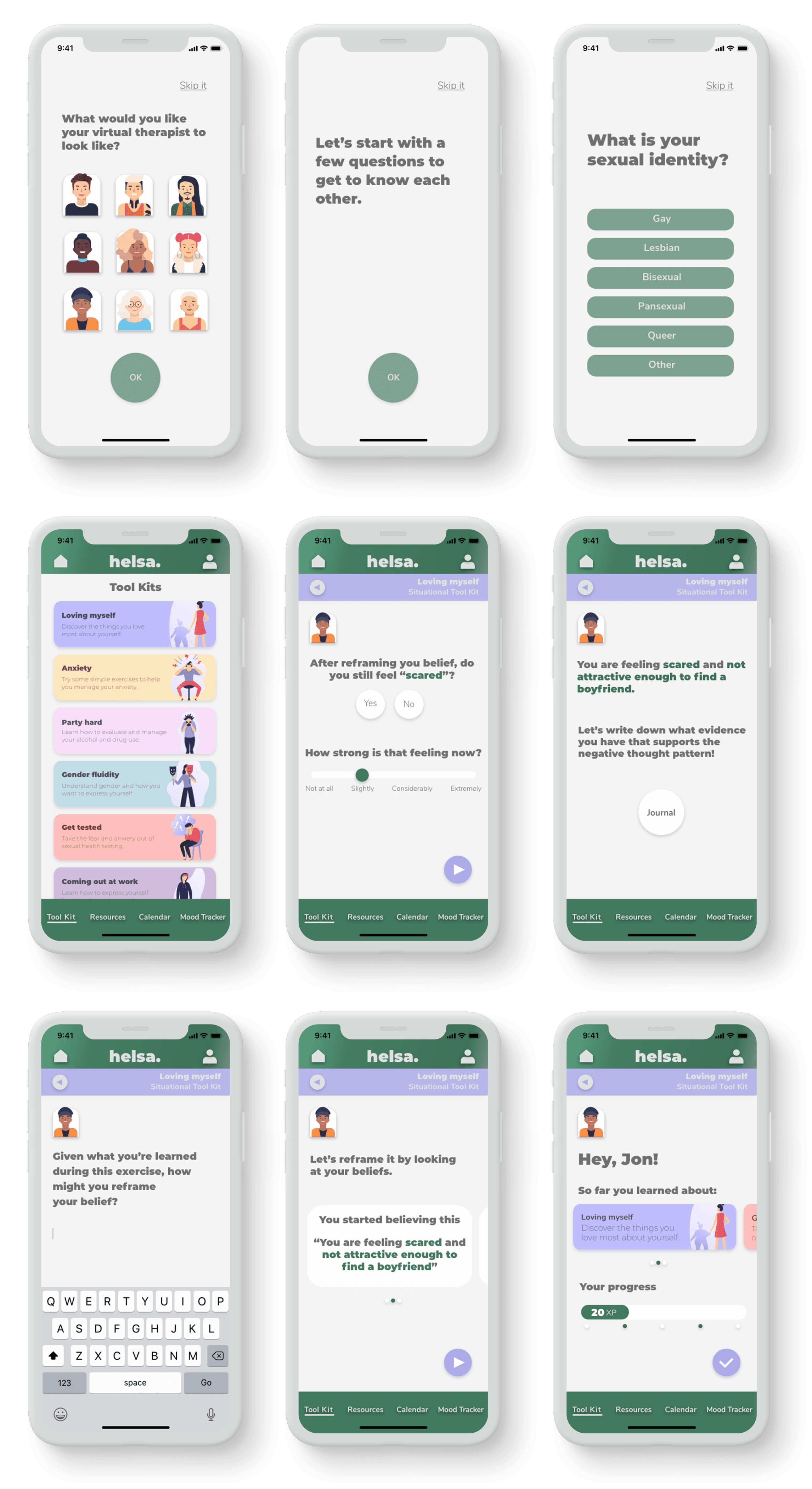
Visual Board
WeIl aimed to create an app that felt warmth, safe, and confidence as the tonal pillars, steering us away from the clinical aesthetic common in health apps and toward something that felt more like a trusted space than a medical product.
Part Three:
Version 1 | Feature #1
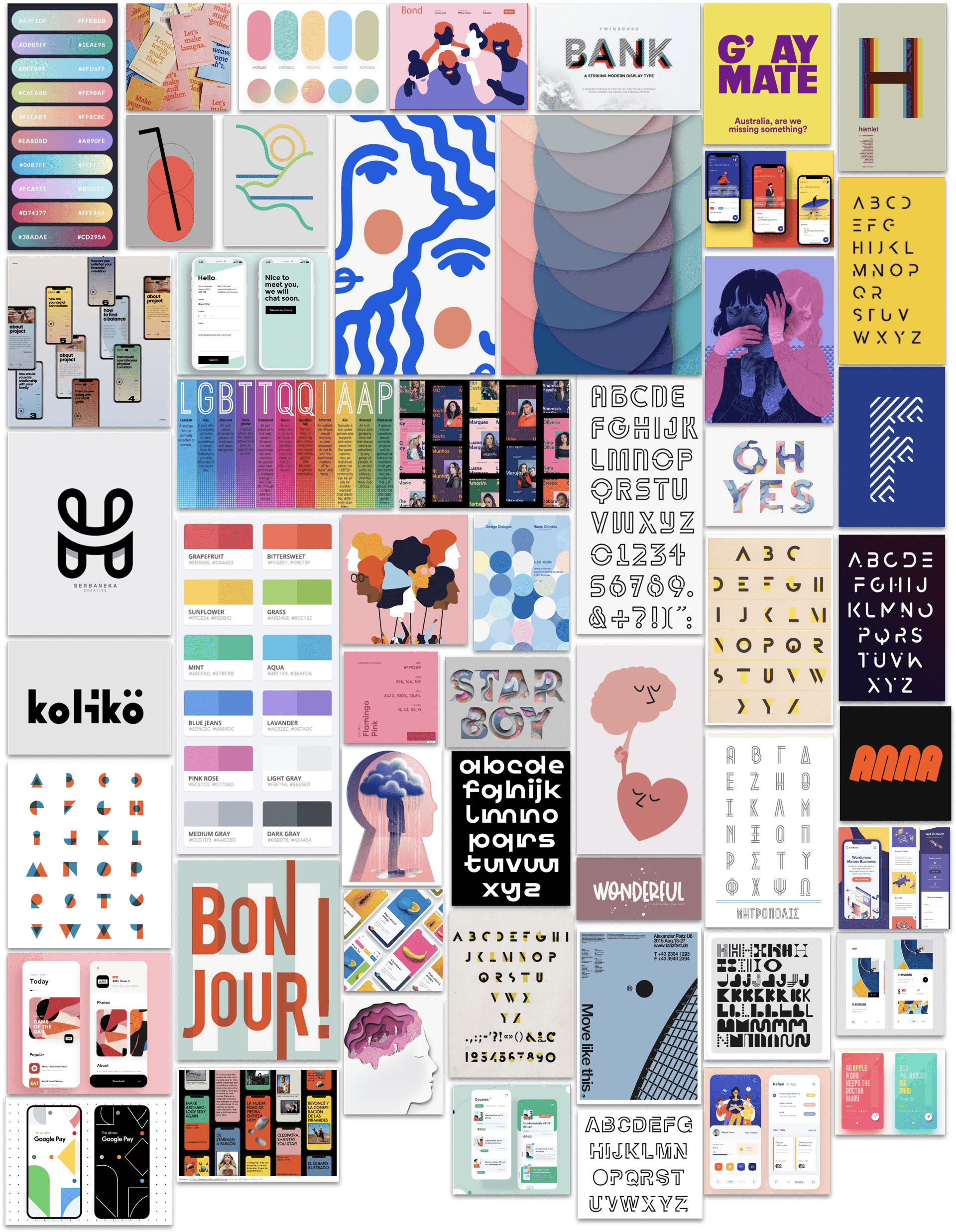
Onboarding
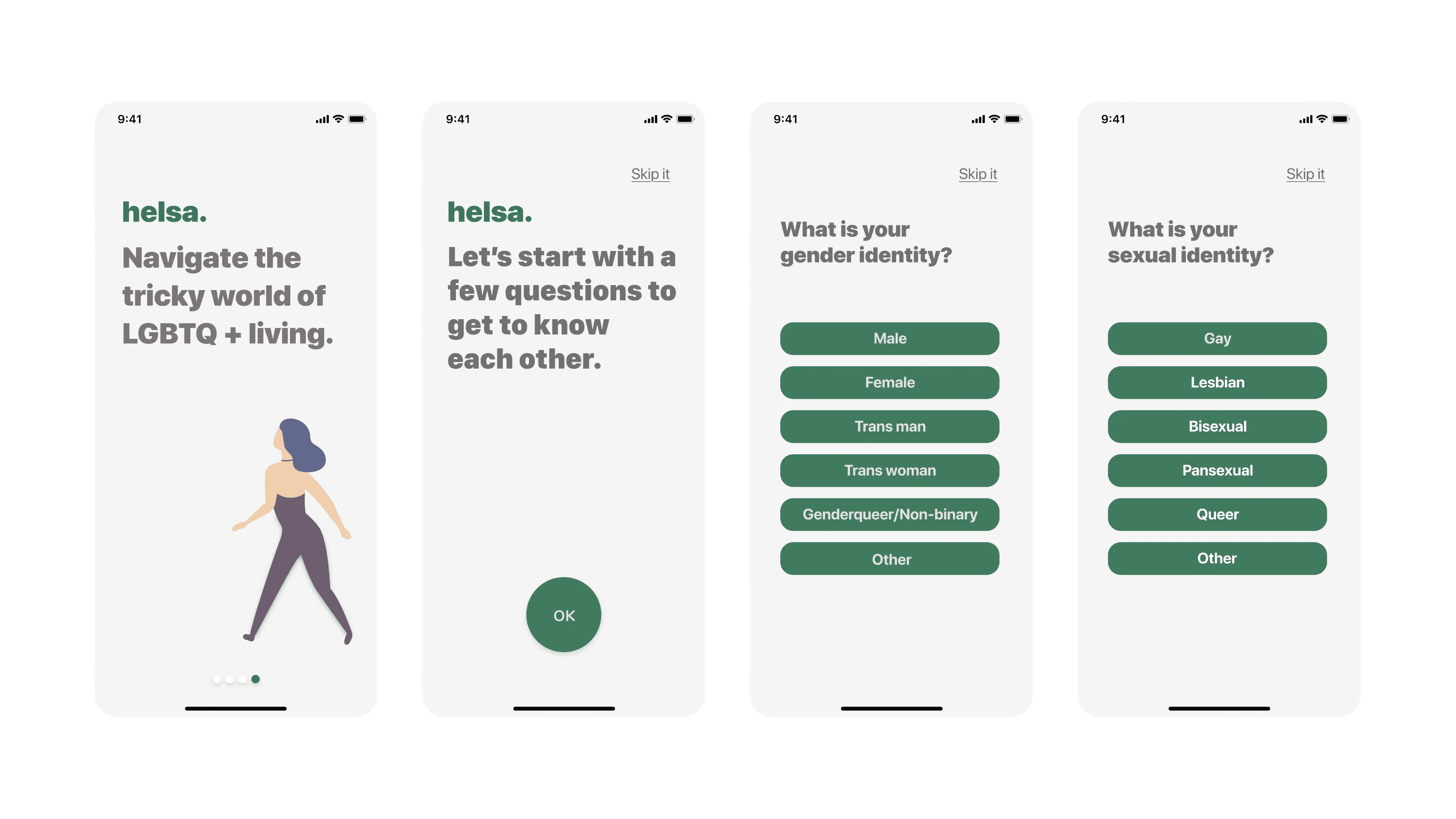
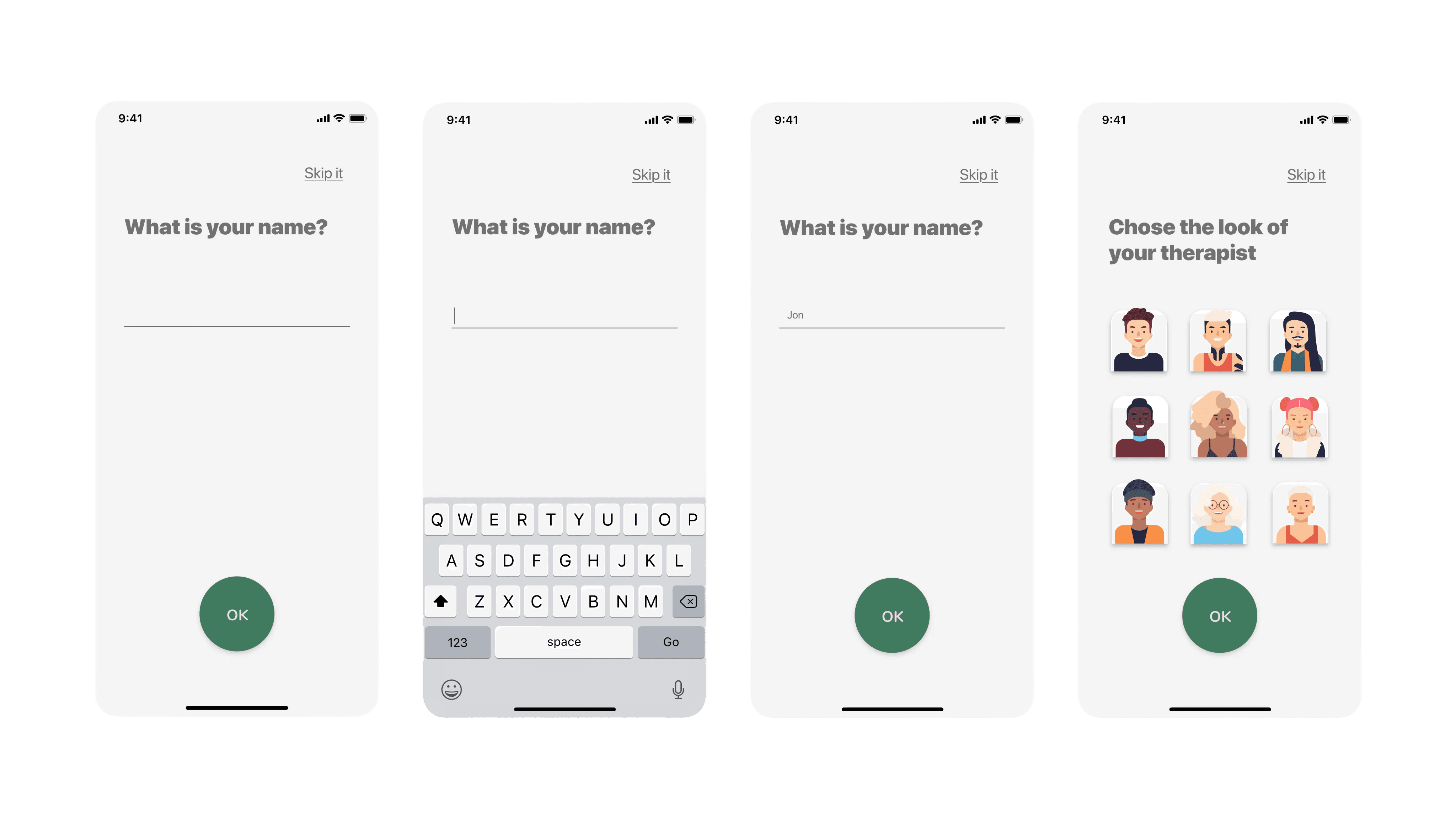
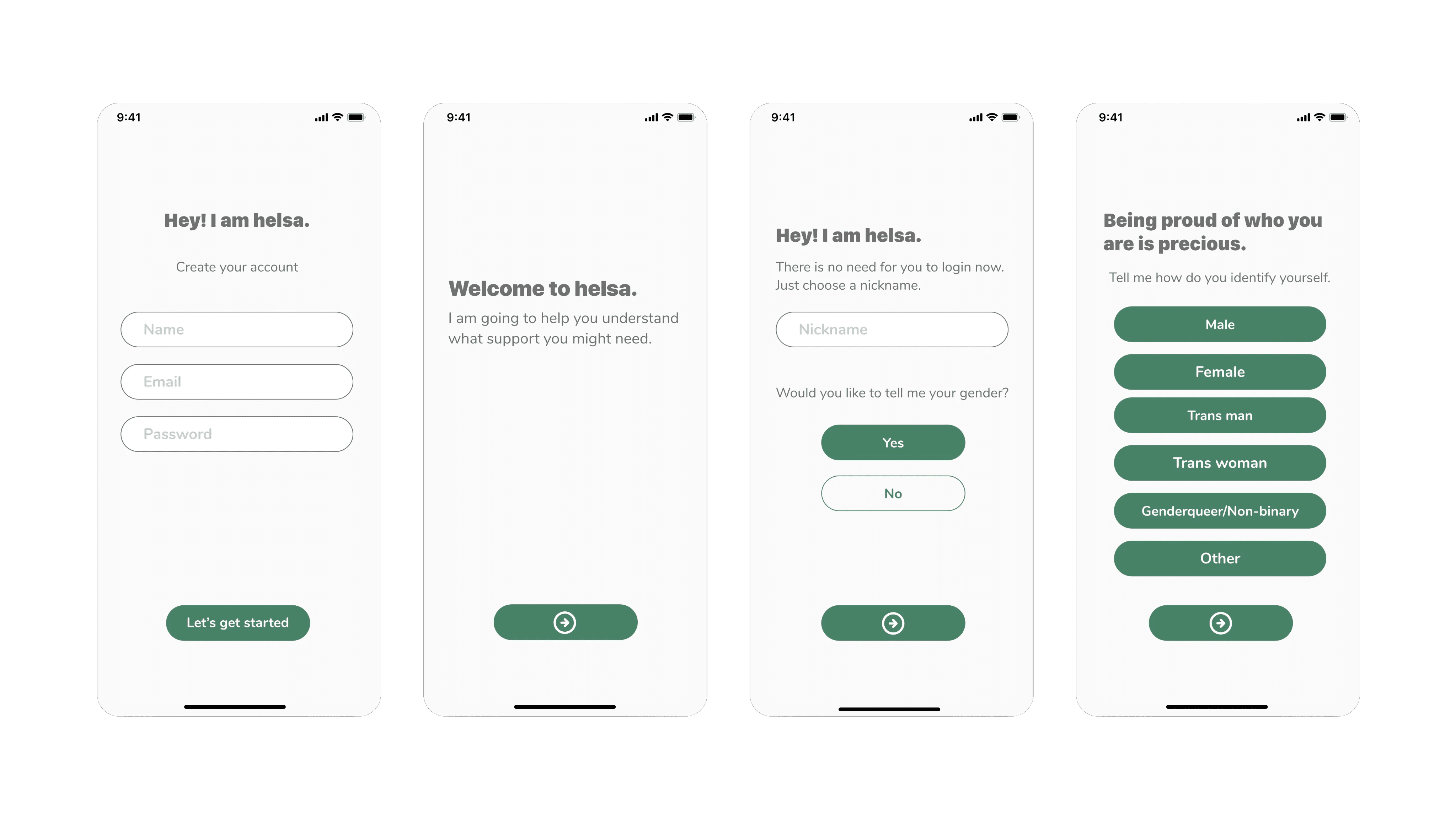
The V1 used a standard multi-step form to collect user information. It worked logistically, but testing revealed a clear problem: users hesitated or abandoned at the point where we asked about identity and mental health history. The form framing felt too clinical for questions that personal.
Version 1 | Feature #2
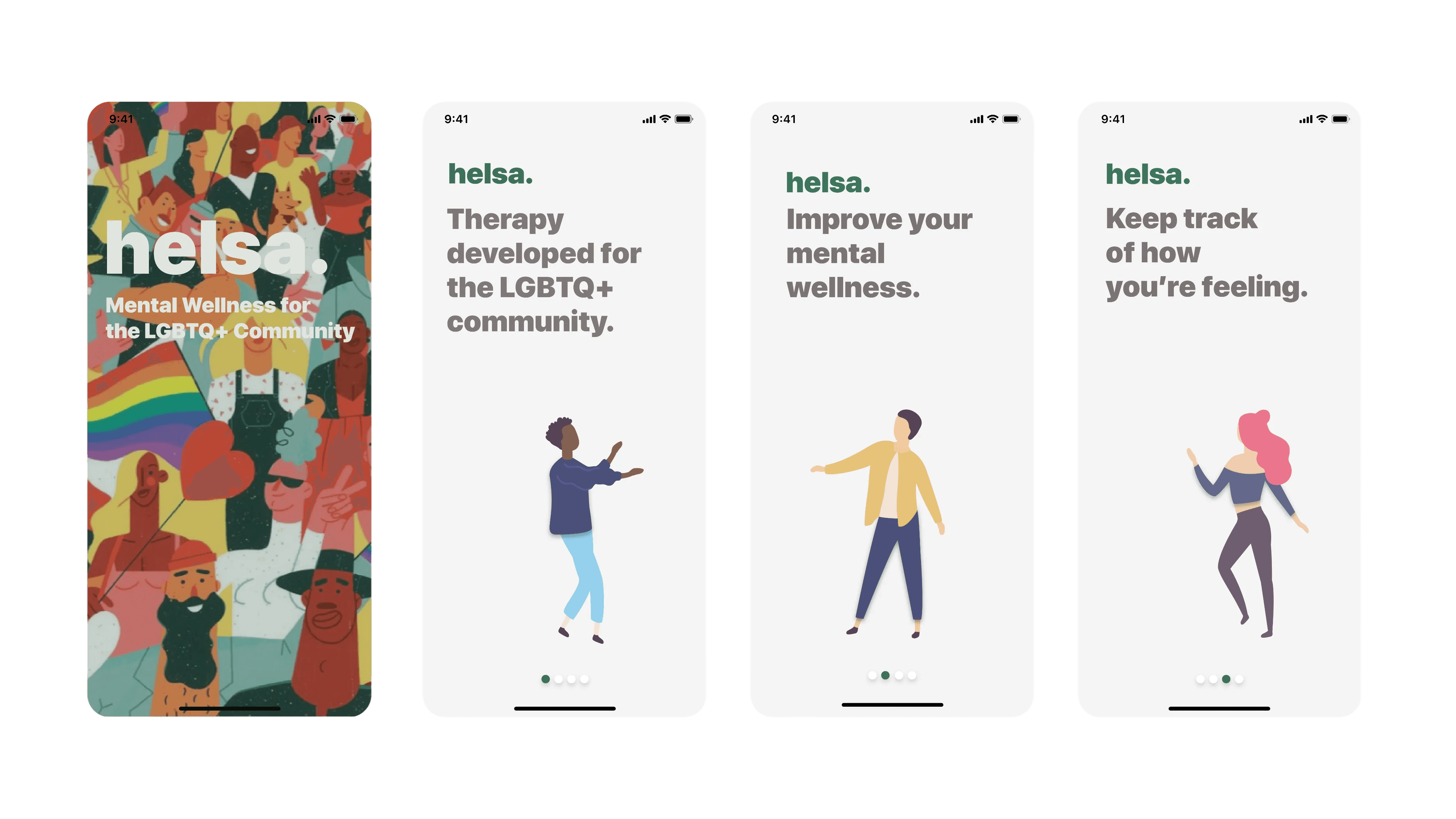
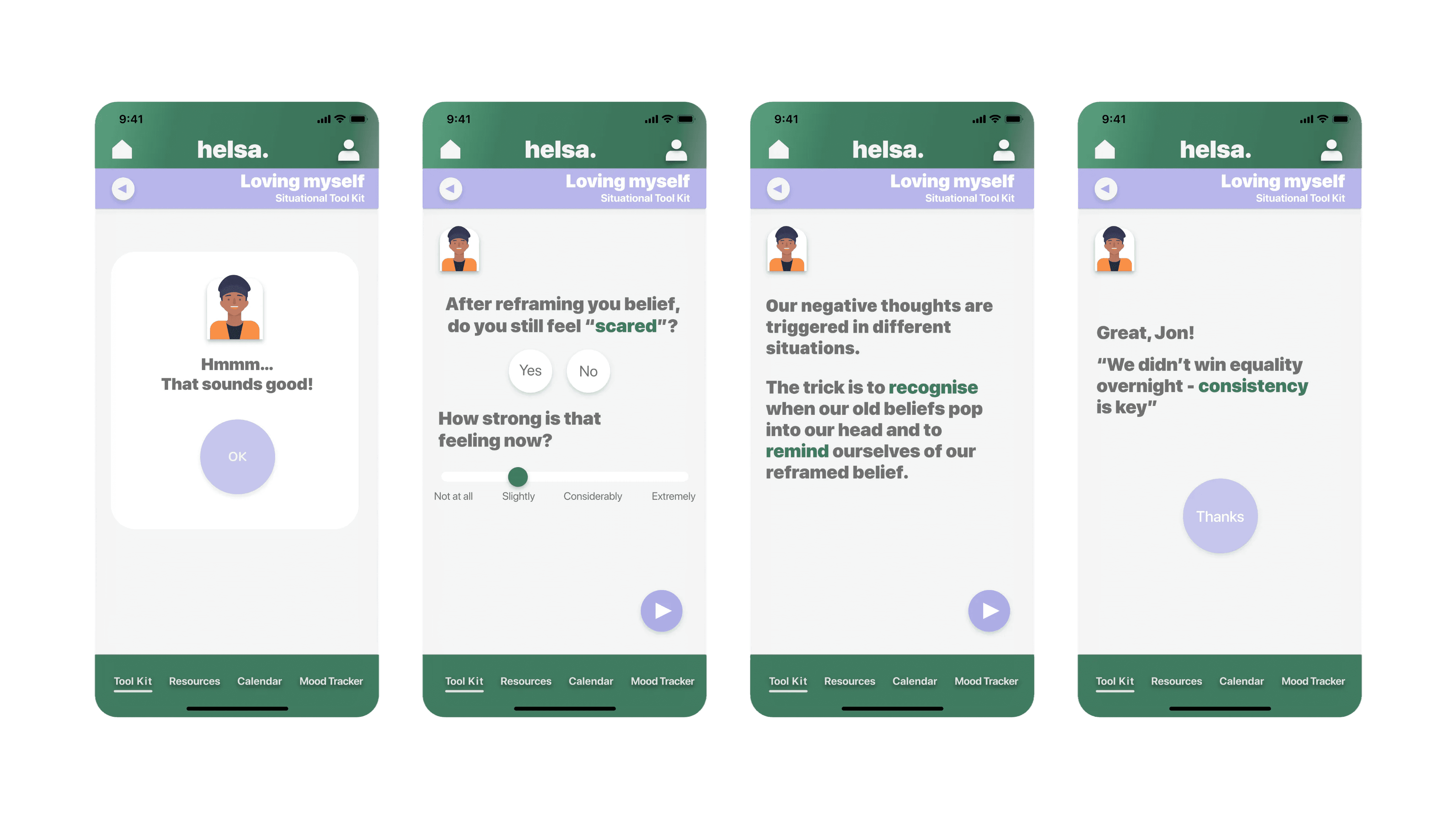
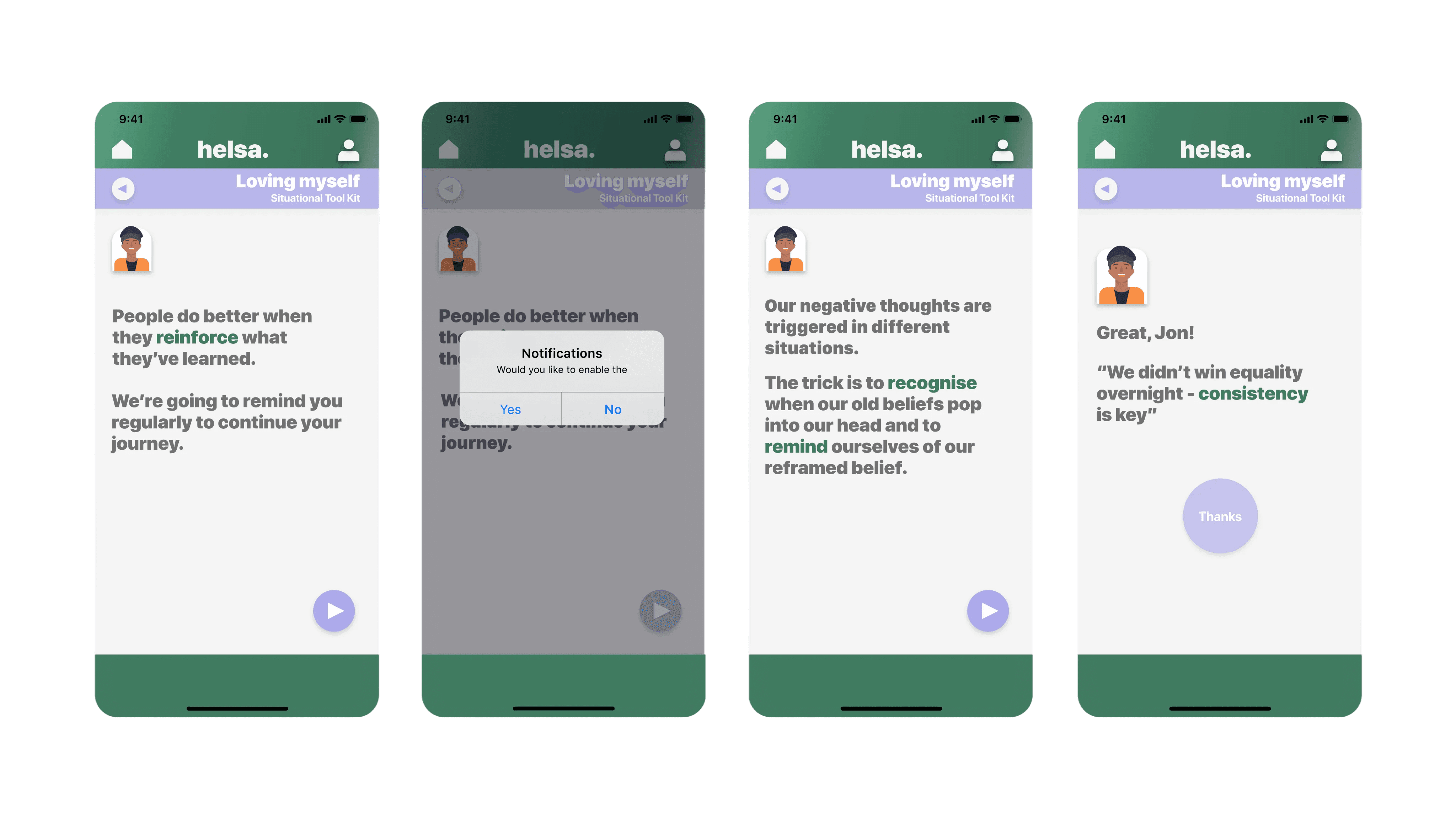
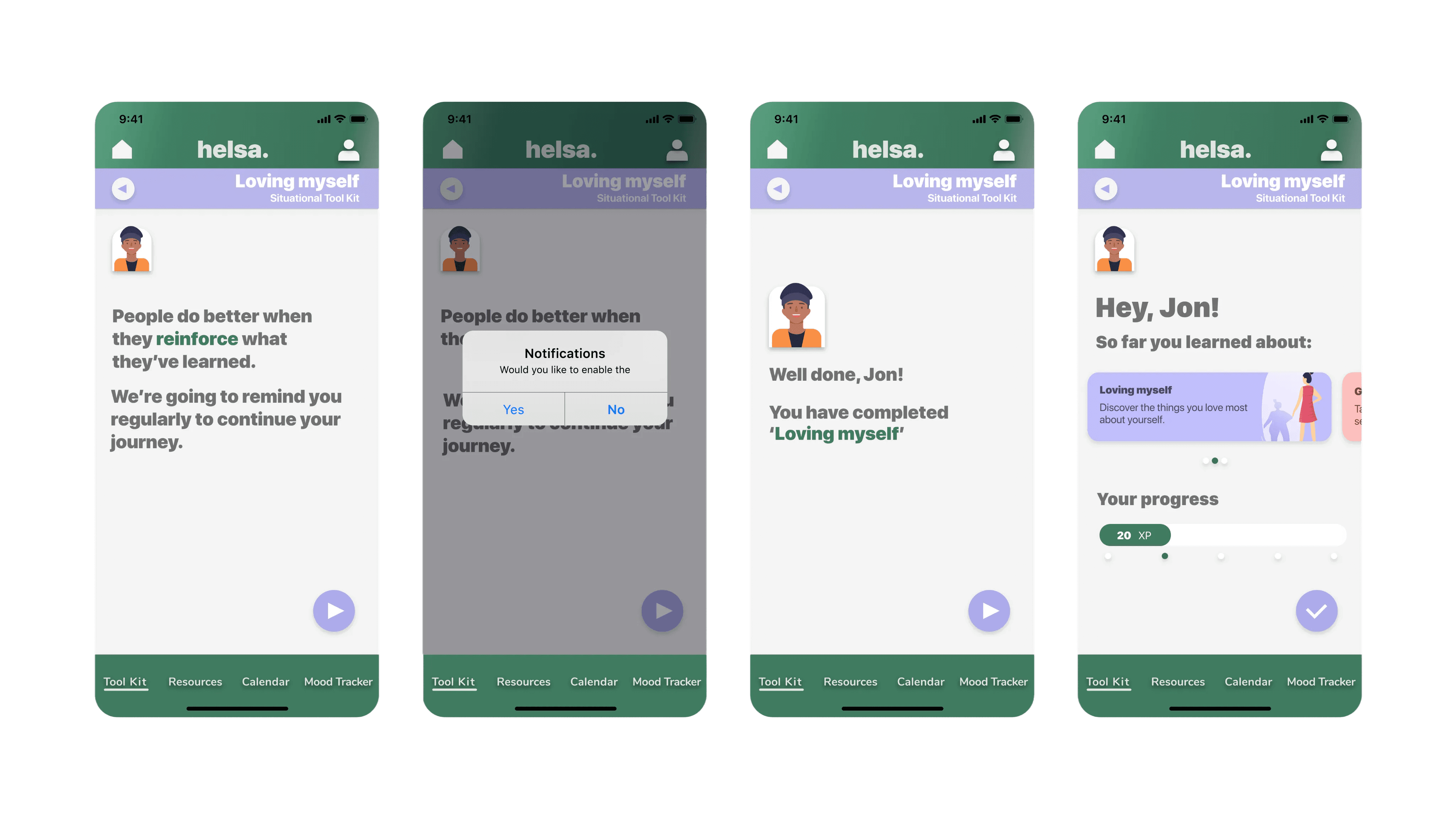
Tool Kit
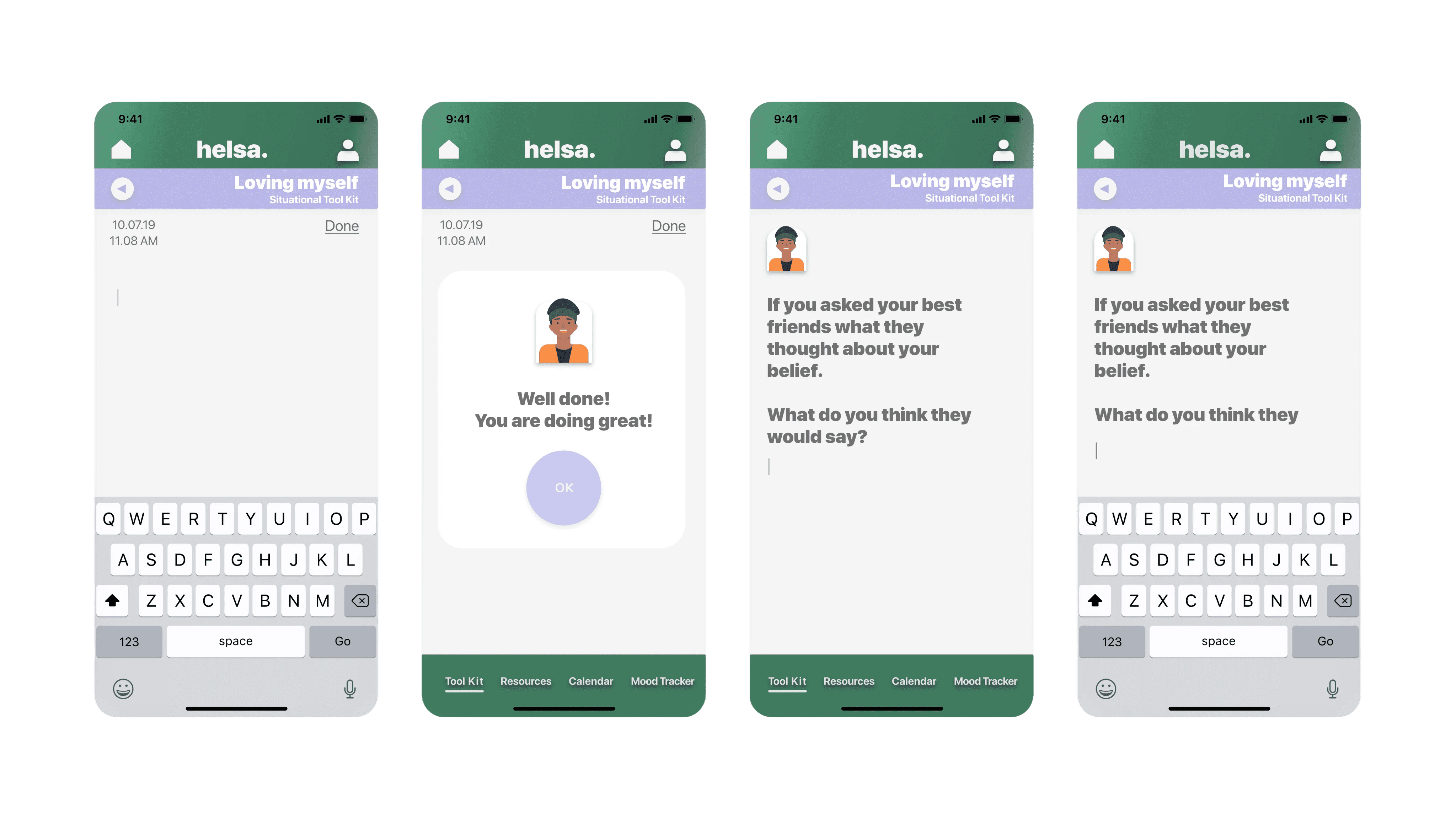
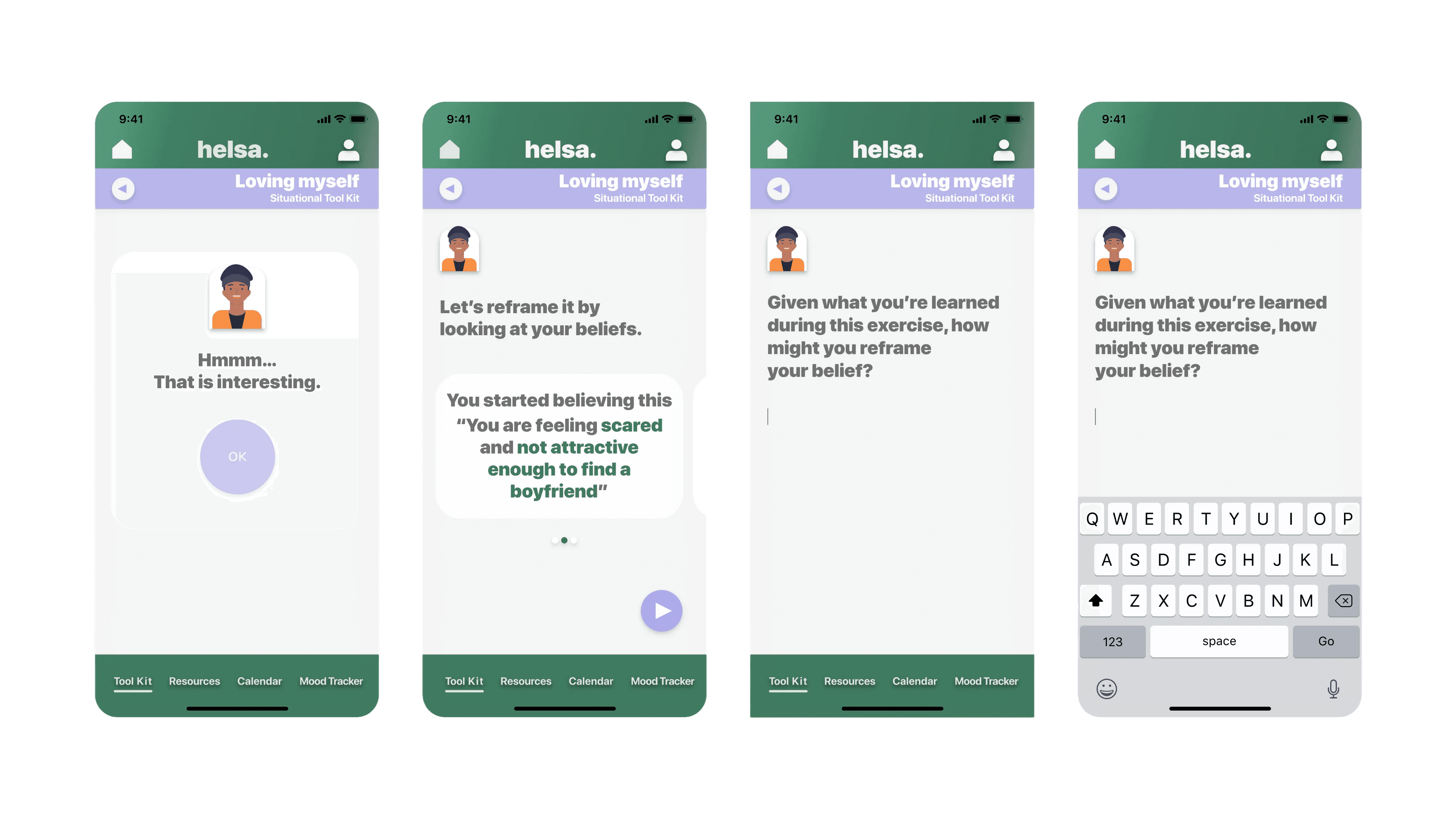
This feature offers a range of self-reflection programmes on topics like identity, anxiety, and relationships. Users are guided through structured journeys designed to reinforce positive patterns and reduce negative ones between therapy sessions.
Users felt that weekly sessions alone weren't enough, and they wanted something to engage with in the days between appointments. Integrating the Tool Kit with the therapists creates a continuous support loop.
Version 2 | Feature #3
Chatbot and Matching
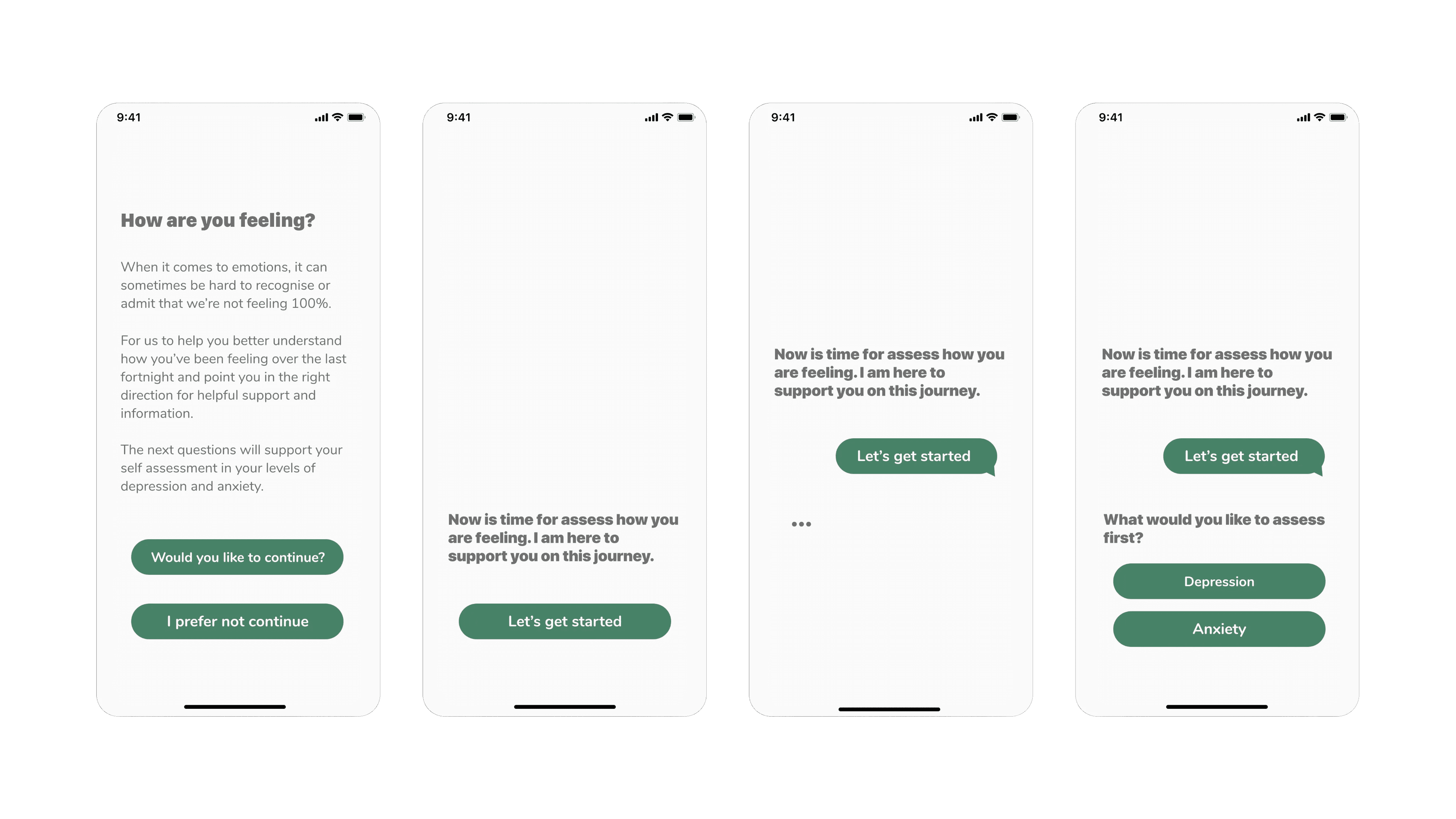
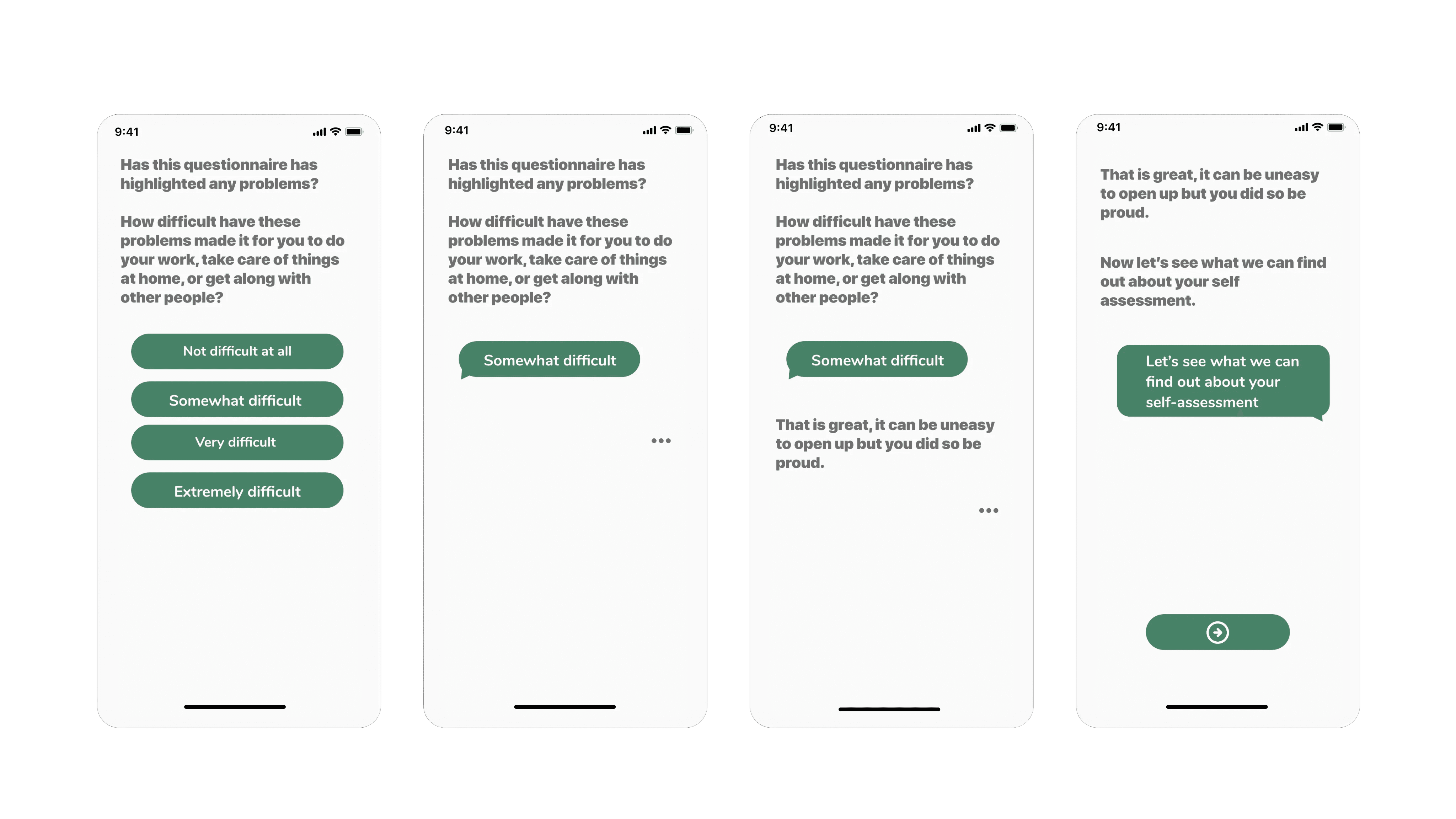
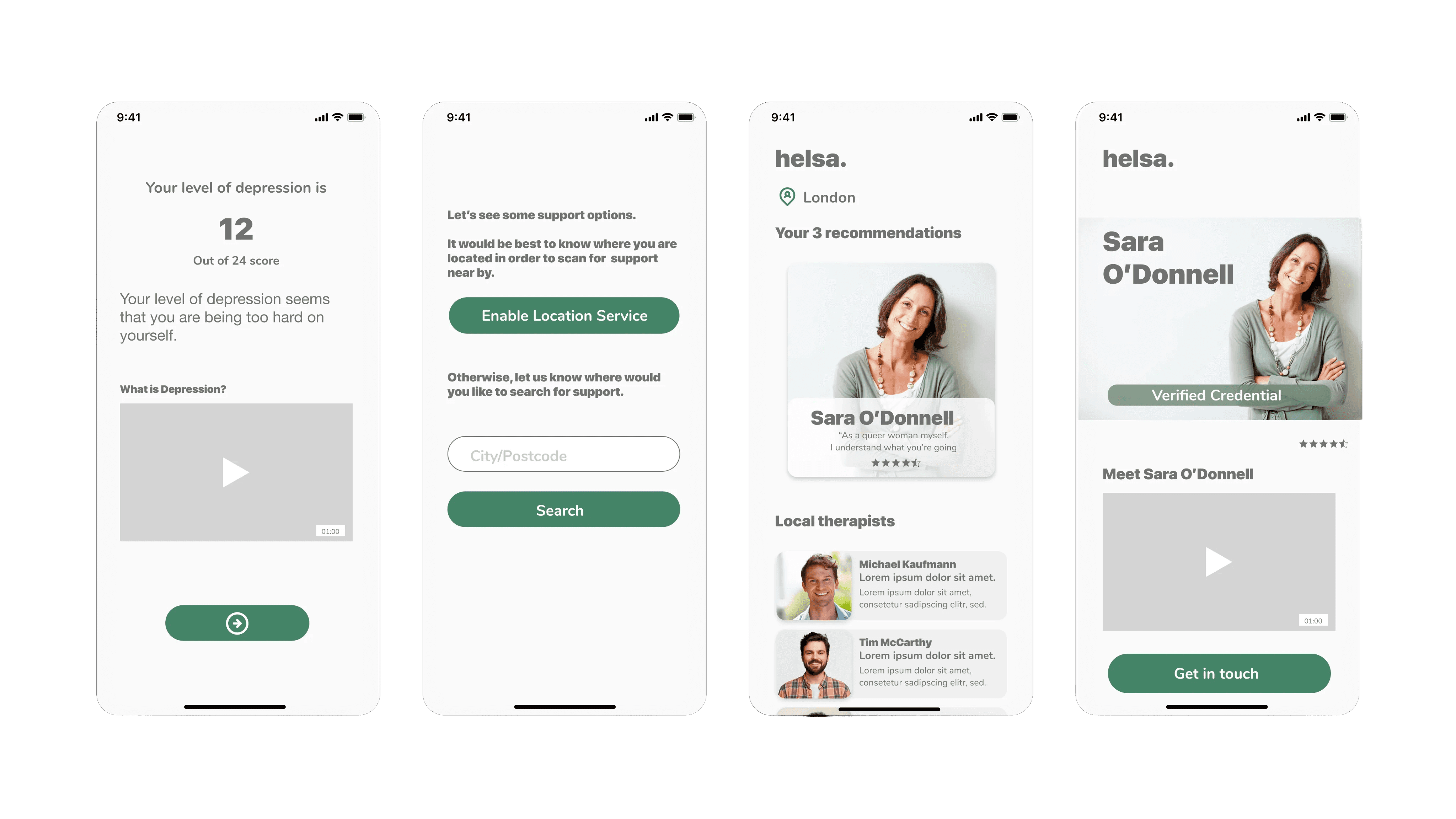
The final prototype's biggest structural change from V1 was the introduction of a chatbot-led onboarding and matching flow.
The final version leads with a chatbot that asks questions to understand emotional state, preferences, and the kind of support needed, then recommends therapists who specialise in the relevant areas.
This conversational approach makes the sensitive parts of onboarding feel more natural, and it produces better matches because the system understands context before surfacing options.
The result is a more supportive entry point that feels personal rather than transactional.
Key Learnings
01
Video Therapy
80% of participants expressed a clear preference for video therapy over messaging or async formats. This was stronger than expected and directly influenced how we prioritised the session-booking flow — video needed to be the obvious default, not a buried option.
02
Complementary Tools
Testing confirmed that the Tool Kit wasn't just a nice-to-have — users actively wanted structured support between sessions. Features like guided programmes and check-ins proved as important to the perceived value of the platform as the therapy matching itself.
03
Pre-diagnosis Questionnaire
Participants repeatedly asked for a short assessment before being shown therapist options, something to help them understand what kind of support they needed before they had to choose.
You may also like
Recommendations
“Dedicated and detail-oriented designer with a strong growth mindset, always striving to improve and enhance user experiences”
Ivana D.
Senior Product Designer at Deloitte UK
“Highly creative, hard-working designer with strong project management and communication skills. He excels at meeting deadlines, presenting ideas, and solving design challenges”
Katherine M.
Marketing Manager at South Bank Colleges
“Proactive and insightful designer who quickly delivers quality work. At Helsa, his clickable prototype played a key role in securing VC-backed accelerator funding”
Rob C.
Entrepreneur & Fintech Leader
Let's talk
drigofernando@gmail.com